Vietnam Airlines business class vs economy: is it worth the upgrade?..

When booking flights around Southeast Asia, business class often feels difficult to justify. Flight times are short, the cabins are smaller than on long-haul routes, and the difference between economy and business can sometimes seem minimal.
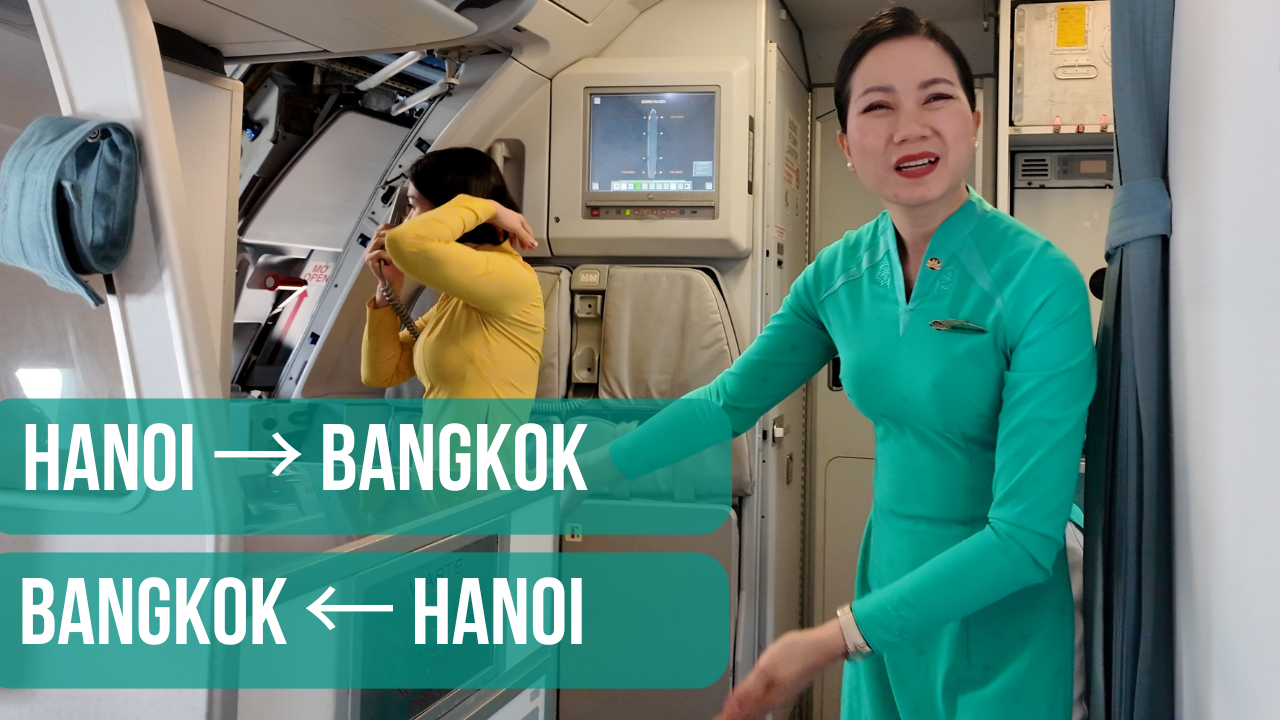
To find out whether the upgrade is really worth paying for, I flew Vietnam Airlines Business Class from Hanoi to Bangkok and then returned on the exact same route in Economy Flex. The result was an interesting comparison that highlighted where the extra money goes—and whether it offers genuine value.
The first noticeable difference appeared before boarding. Business class passengers at Hanoi's Noi Bai International Airport benefit from dedicated check-in counters, which on this occasion were almost empty. Economy passengers faced significantly longer queues. After check-in, business class travellers can use the priority security and immigration lanes, reducing waiting times even further.
One of the biggest benefits of the upgrade is access to the Vietnam Airlines Lotus Lounge. While the lounge does not offer the best runway views in the airport, it is modern, clean and spacious. There is a wide selection of food, drinks and desserts, along with numerous seating options including private work areas, relaxation spaces and even massage chairs. For passengers arriving early at the airport, the lounge alone adds considerable value to the experience.
Boarding also begins differently. Business class passengers are invited to board first, allowing them to settle into their seats before the main cabin fills up. On the Airbus A320 operating this route, Vietnam Airlines offers just four business class seats at the front of the aircraft. Although this is not a lie-flat international business class product, the additional width, legroom and personal space are immediately noticeable.
The onboard service is also enhanced. Shortly after boarding, cabin crew offer welcome drinks before takeoff. After departure, hot towels and a full meal service follow. The flight from Hanoi to Bangkok lasts around one hour and forty minutes, which is enough time to enjoy the meal, have a coffee and relax before landing.
Economy class, however, was better than expected. While passengers miss out on the lounge, priority services and larger seats, Vietnam Airlines still provides a solid full-service experience. Meal service is included, cabin crew are attentive and the flight remains comfortable for such a short journey. Compared with many low-cost carriers operating within the region, the economy product is noticeably better.
The most surprising part of the comparison was the price difference. The business class ticket cost approximately US$375, while the economy flex ticket cost around US$270. In other words, the upgrade cost only about US$100.
For that additional amount, passengers receive priority check-in, priority security, lounge access, priority boarding, larger seats, enhanced meals, welcome drinks, hot towels and a much more relaxed overall journey.
From a frequent flyer perspective, the difference in mileage earning was less impressive. The business class flight earned 763 Flying Blue miles and 15 XP, while the economy flight earned 610 miles and 5 XP. The additional miles alone do not justify the upgrade.
However, when considering the overall experience, Vietnam Airlines Business Class represents excellent value on this route. For an additional US$100, the improvement in comfort and convenience feels significantly greater than the additional cost. For travellers flying between Hanoi and Bangkok, it is a surprisingly worthwhile upgrade.

No bio available.
All Rights Reserved © 2026